Type erasure
– mal anders
(Type erasure, take two)
Tobias Hoffmann
C++ User Gruppe Aachen, 2026-06-10
Agenda
- Type Erasure 101
- What? Why? Alternatives?
void *, dynamic_cast
std::any (“type safe void *”)
- Another Idea
- Motivation: Tree Visitors
std::any revisited
- Lock-and-Key Principle
- Example, Implementation idea
Opaque, unique_anyptr, shared_anyptr
What is Type Erasure?
- “Forget” the original compile-time type
- Only for pointers!
- Why not (e.g.)
int *?
- Pointer arithmetic:
pInt32++ → addr += 4
- Alignment
- Just use
char *!
- Or even better:
void *
- How:
static_cast<void *>(p) / <T *>
- Possibly:
reinterpret_cast<intptr_t>(p)
Features of void *
- No dereferencing (
*pVoid → compiler error)
- Consider
pVoid += N:
pVoid += N * sizeof(*pVoid)
- Does not work (as per Standard):
- MSVC:
error C2036: 'void *': unknown size
- CLANG:
error: arithmetic on a pointer to void
- Extensions... (as if
sizeof(...) == 1)
- GCC:
warning: pointer of type 'void *' used in arithmetic [-Wpointer-arith]
Why even use Type Erasure?
Examples:
someCallback(…, void *userData)
std::map<int, …different types…>
printf("%s: %d\n", "foo", 5)
std::vformat(std::string_view fmt, std::format_args args)
std::function<int()> fn = []() { … }
Common alternatives
std::variant<std::monostate,Foo,int>
(a.k.a. “Tagged Union”)
template <class T> …
- Base + Derived (runtime polymorphism)
- most extreme: everything derives from
Object, IUnknown (outside of C++ type system), …
- even when original class hierarchies cannot be altered, composition is usually possible
Problems with void *
- Zero type safety
- Destructor?
- Strict aliasing violations possible
- Different pointer types expected to point to different memory locations
- Only
char *, signed/unsigned char * (and std::byte in C++17)) are safe
- Code intent unclear to human readers
- Idea: Use
void * as “Base” …
When to (not) use dynamic_cast?
//void *p = ...; // not a complete class type
                 // (and not polymorphic, either)
Base *p = ...; // = nullptr;

if (Foo *pf = dynamic_cast<Foo *>(p)) {
  // ...
}

// or: Foo &f = dynamic_cast<Foo &>(*p);  // → std::bad_cast
- Pointer value is valid (or
nullptr)
- RTTI is not disabled (
-fno-rtti)
(except for cases already handled by static_cast)
- Object is of polymorphic type:
std::is_polymorphic
→ has at least one virtual function (possibly via base)
std::any (“type safe void *”)
// std::any foo = User{"Alice", 30};  // temporary object
std::any foo = std::make_any<User>("Alice", 30);  // RVO (mandatory)

if (std::string *foo = std::any_cast<std::string>(&foo)) {
  // ...
}

// or: std::string &bar = std::any_cast<std::string &>(foo);
                          // → std::bad_any_cast
- C++17 [with RTTI] (alternative:
boost::any)
- Value semantics. Copyable. Memory-safe (dtor).
-
std::any ap = std::unique_ptr<…>(…) (unique_ptr is move-only … → C++23)
-
“Interface”: Clone/Copy, Destroy
Another way?
- Questions so far?
- Does
std::any allow extracting Base for Derived?
- Interfaces, (Runtime) Duck typing, …
IUnknown::QueryInterface, possibly dynamically (not in COM!)
- Data-oriented design (one pointer per type, separate arrays, …)
- Entity-Component-System (ECS)
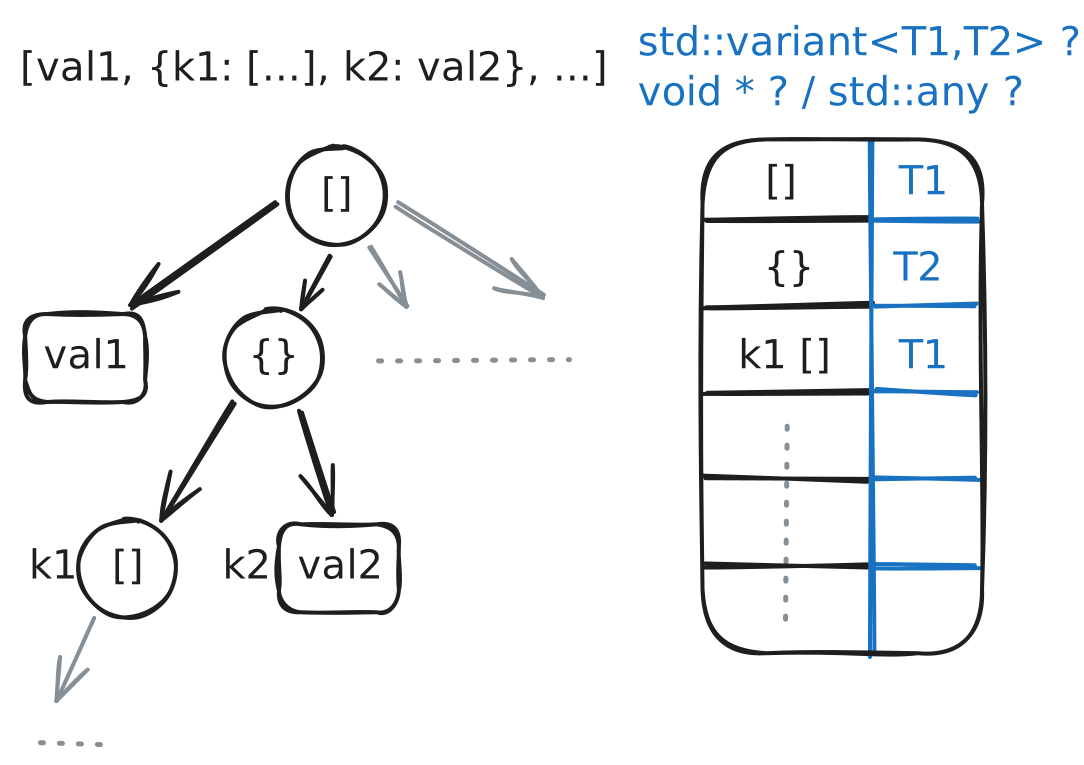
Motivation: Tree Visitors
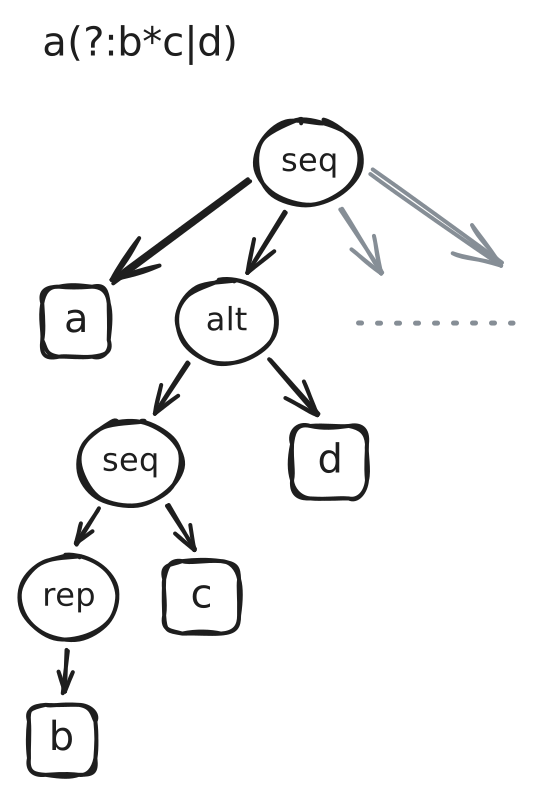
- Scenario: Traversing a complex Tree Structure, e.g. Abstract Syntax Tree (AST)
- Polymorphic node types
→ Visitor pattern
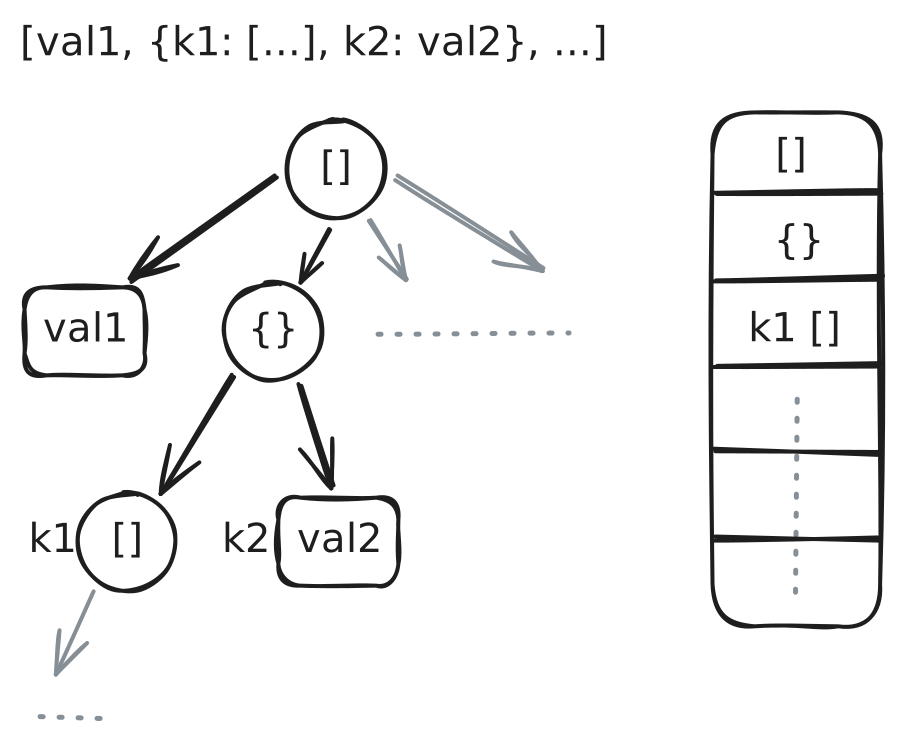
- Possibly implicit: during parse, only stack "exists"
- Idea: Build
map, vector, …
JSON: The Stack
JSON: The Dilemma
- Problem: Inner nodes are visited multiple times.
Information on the way down also needed on the way back up.
- Solution A: Visitor maintains a parallel,
manual stack “synced” with the traversal depth.
- What is the
value_type of the (e.g.) std::stack<T>?
JSON: The second Stack
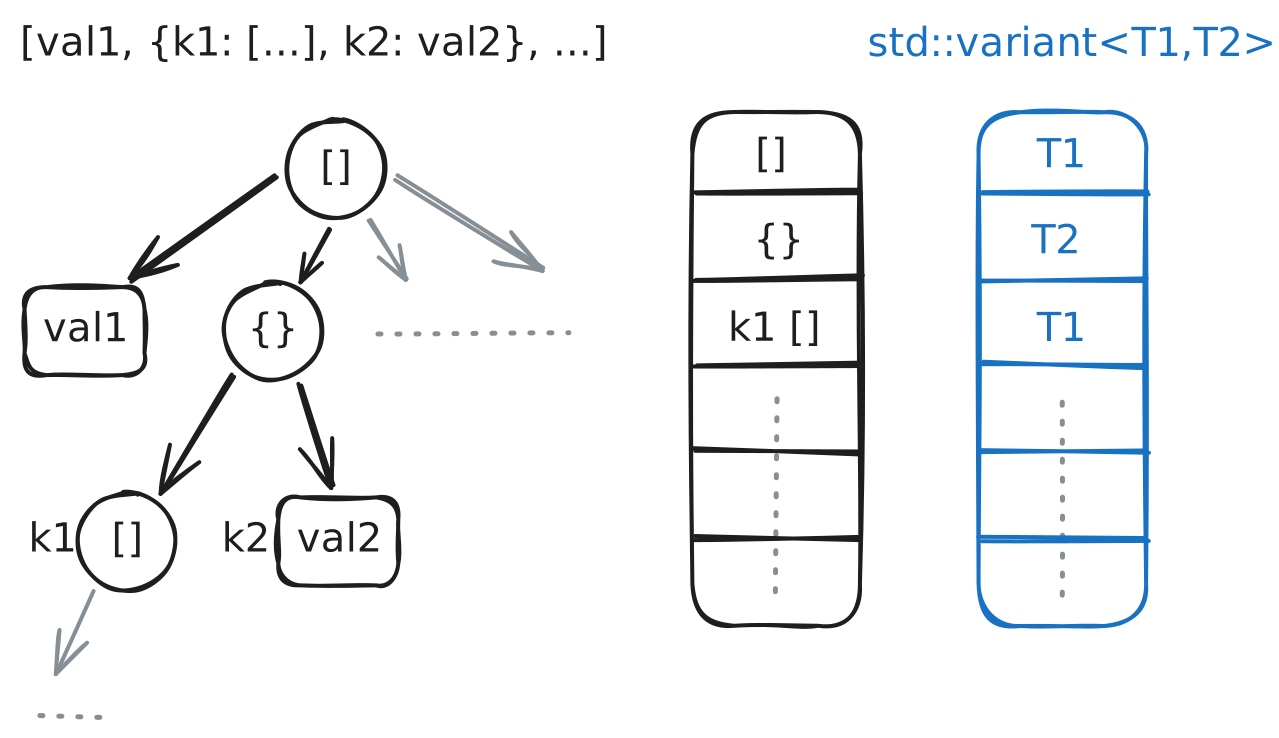
JSON: The third Stack…?
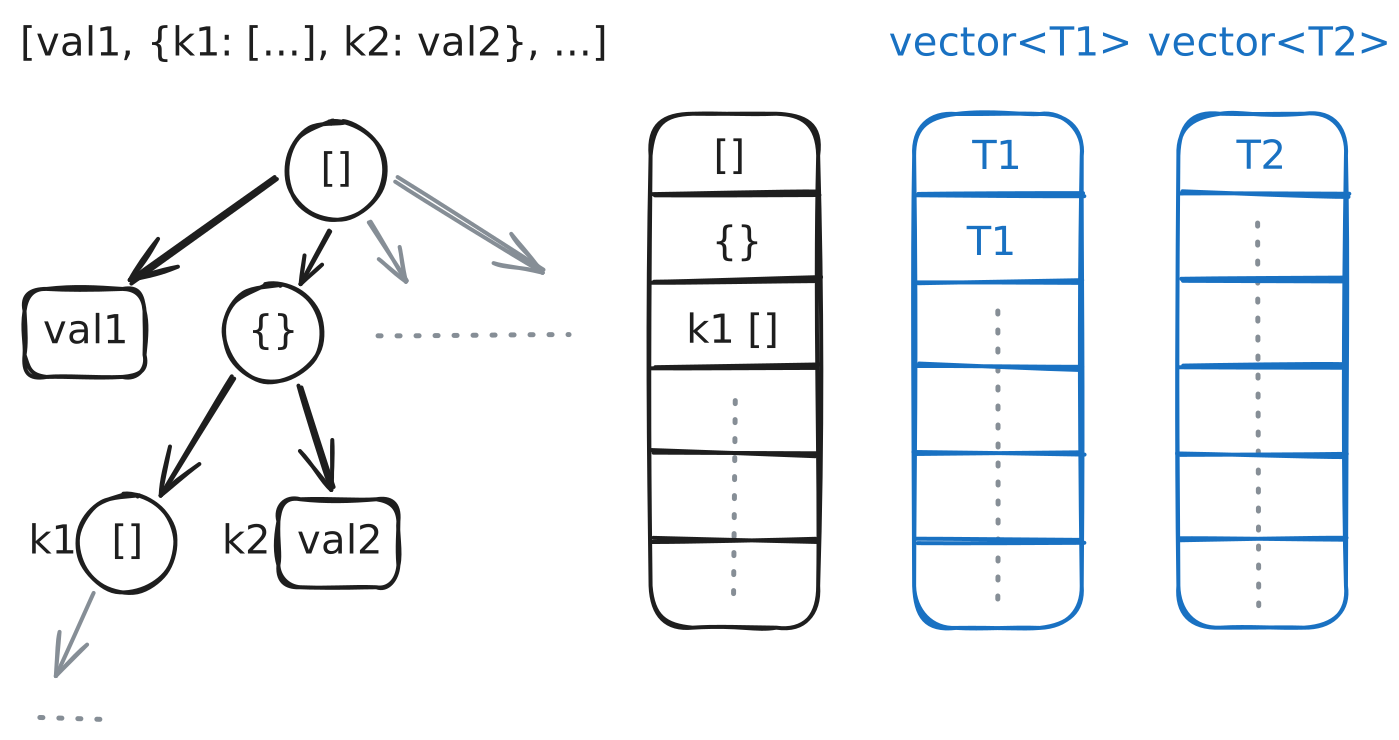
JSON: Unified Stack!
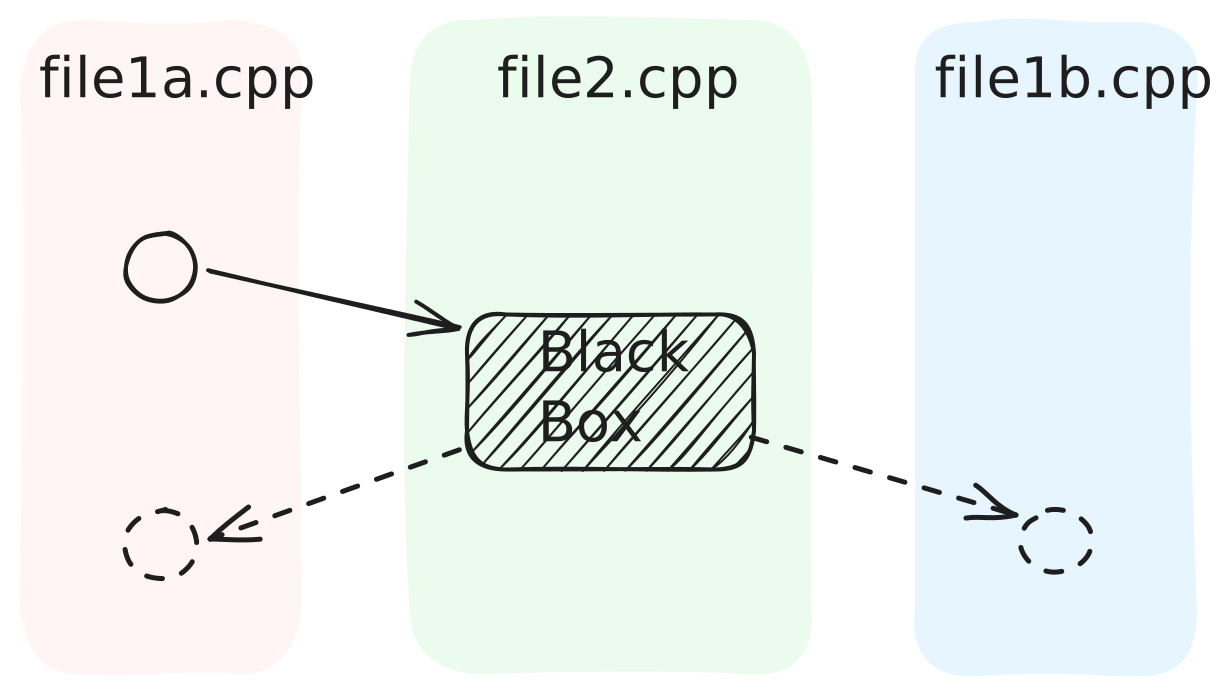
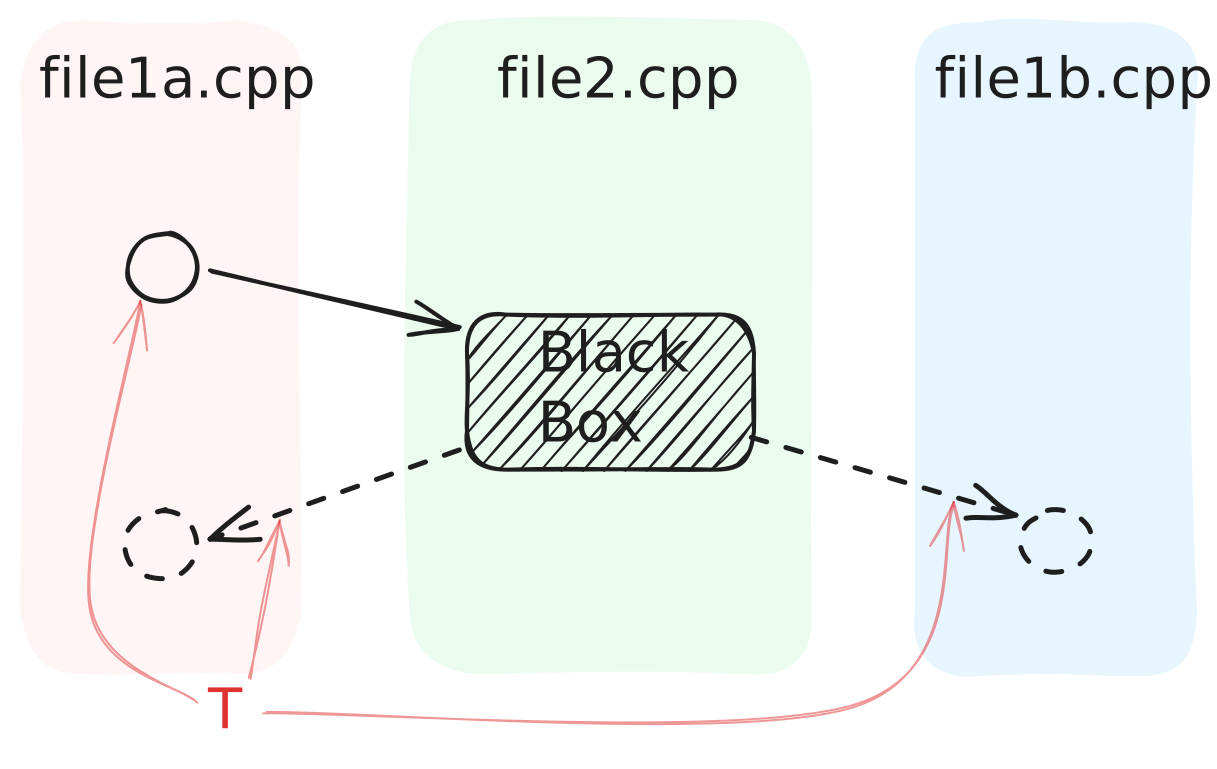
std::any revisited: The scene
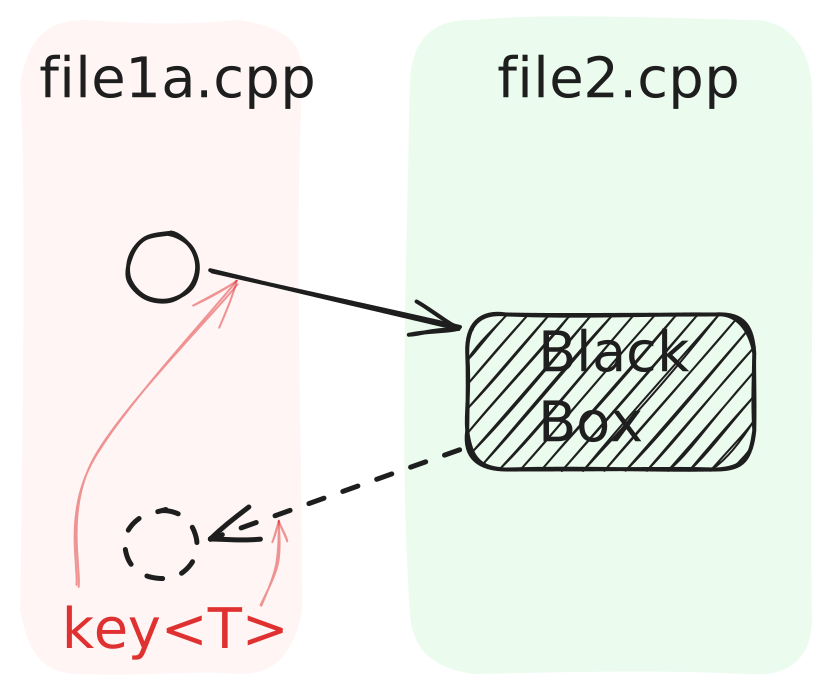
std::any revisited: The key
The Lock-and-Key Principle
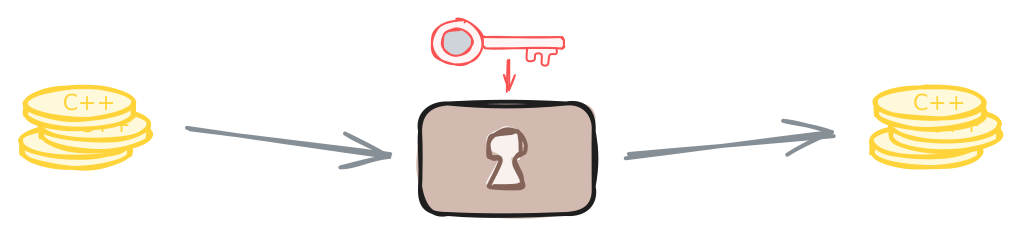
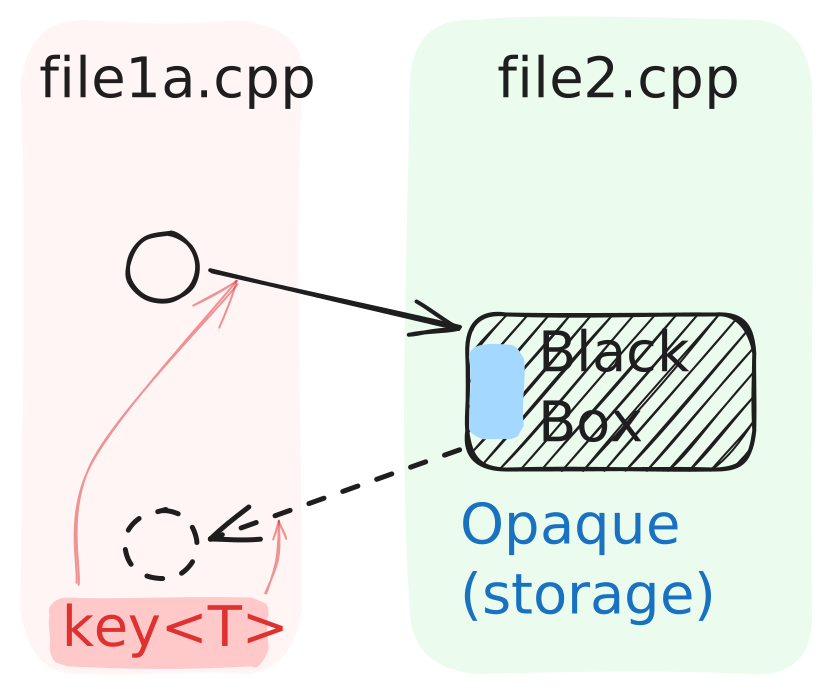
- Key is required to store and retrieve the “contents” to/from the “storage”.
- Lock allows only exact match (here).
- But: Key does not have to be the “type”!
Reification
Object instance as key
Opaque: Example (I)
// type-distinct alias, for overloading
struct sequence_t : Opaque {
  sequence_t() = default;
  sequence_t(Opaque &&o) : Opaque(std::move(o)) { }
};
// ... struct alternative_t : Opaque

void AST::Sequence::visit(Visitor &v) {
  sequence_t s;

  v.begin(s);
  for (auto &child : children) {
    v.seq(s);  // (e.g.)
    child.visit(v);
  }
  v.end(s);
}
Opaque: Example (II)
sequence_t::Accessor<MySequence *> access_seq; // = Opaque::…
alternative_t::Accessor<MyAlternative *> access_alt;

void MyVisitor::begin(sequence_t &s) /*override*/ {
  s.set(access_seq, new MySequence);
}

void MyVisitor::seq(sequence_t &s) /*override*/ {
  // assert(s.is(access_seq));
  auto node = s.get(access_seq);
  …
}

void MyVisitor::end(sequence_t &s) /*override*/ {
  std::unique_ptr<MySequence> node(s.release(access_seq));
  …
}
Architecture
-
Principle: Separating Data and Access
-
Storage (
Opaque): Holds only an intptr_t and a pointer to a vtable (Accessor_base).
-
Key (
Accessor<T>): Only the correct accessor instance can get, set, release the data.
-
Lock: Invalid pointer casting prevented via strict instance-equality checks (
access == &_access).
-
Destructor of
Opaque uses stored Accessor-pointer for cleanup.
Implementation idea (I)
class Opaque {
public:
  template <typename T, typename Deleter = …std::default_delete<T>…>
  class Accessor;

  // ctor, dtor, move, swap, get, release, set, is, reset …

private:
  class Accessor_base {
    virtual void destroy(intptr_t data) const = 0;
    friend class Opaque;
  };

  intptr_t data = {};
  const Accessor_base *access = {};
};
Implementation idea (II)
template <typename T, typename Deleter>
class Opaque::Accessor<T *,Deleter> : public Opaque::Accessor_base {
public:
  typedef T *value_type;

  value_type operator()(intptr_t data) const {
    return reinterpret_cast<value_type>(data);
  }

private:
  void destroy(intptr_t data) const override {
    del(operator()(data));
  }
  Deleter del;
};

// Accessor<…, nullptr_t> (no deleter); Accessor<int, …>
Implementation idea (III)
template <typename Access>
typename Access::value_type Opaque::get(Access &_access) const {
  if (access != &_access) {
    return {};
  }
  return _access(data);
}

template <typename Access>
void Opaque::set(Access &_access, typename Access::value_type _data) {
  if (access == &_access && _access(data) == _data) {
    return; // unchanged
  } else if (access) {
    access->destroy(data);
  }
  data = reinterpret_cast<intptr_t>(_data);
  access = &_access;
}
Summary/Recap
-
Address of the Accessor is the key, must stay alive (singleton / static) until last
Opaque dtor ran.
-
intptr_t (specializations: w/ vs. w/o Deleter).
-
Key usually directly available (same file, …).
-
Bad key:
std::bad_cast / nullptr / .is(…)
-
No
typeid(…), dynamic_cast, RTTI, … used/needed.
-
Minimal memory requirements (
intptr_t + const Accessor_base *) at Opaque.
unique_anyptr
- PImpl Idiom (Pointer to implementation)
-
Often
std::unique_ptr<Impl> with only private / forward declared struct Impl;
-
Works, as long as destructor (
= default;) not in header, but in implementation.
-
Why not hide it fully?
-
unique_anyptr impl; (in header / public class)
-
unique_anyptr::Accessor<Impl> access_impl
- (not on public github yet)
shared_anyptr
- But what if I need a shared pointer?
- Don't reinvent the wheel, also wrt. interop!
std::shared_ptr<void> to the rescue:
template <class Y, class Deleter>

void reset(Y *p, Deleter d)
I.e.: Deleter is type erased (but can also be just a function pointer)
-
std::dynamic_pointer_cast(…) will not work (dynamic_cast under the hood!)
- (github code does not have interop yet)